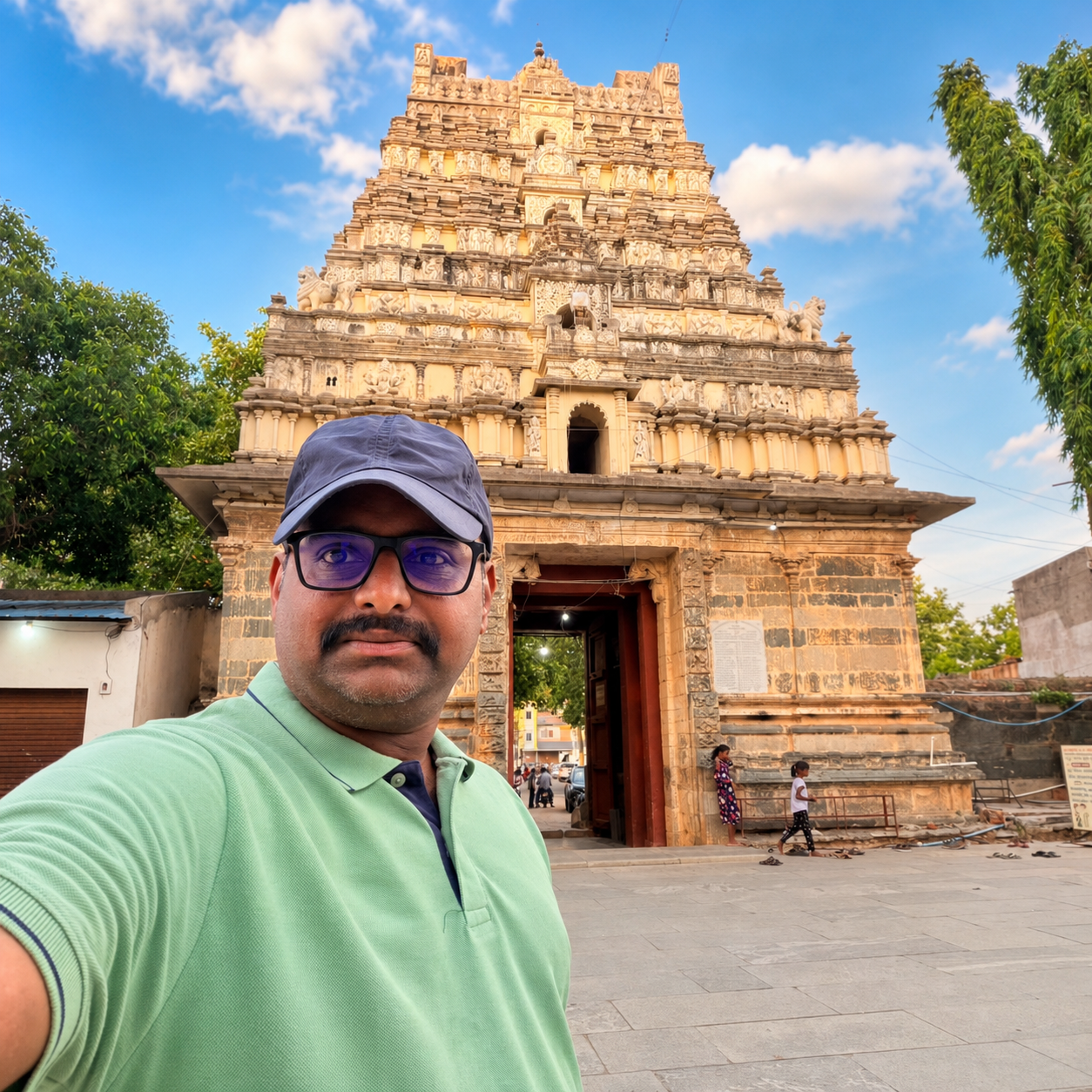
For history lovers, heritage walkers, and curious travelers, urban landmarks are rarely just bricks, mortar, and dials—they are living chronometers of a city’s soul. Nestled amid the bustling commerce of North Karnataka, Belagavi (Belgaum) holds a treasure trove of colonial, medieval, and cultural heritage.
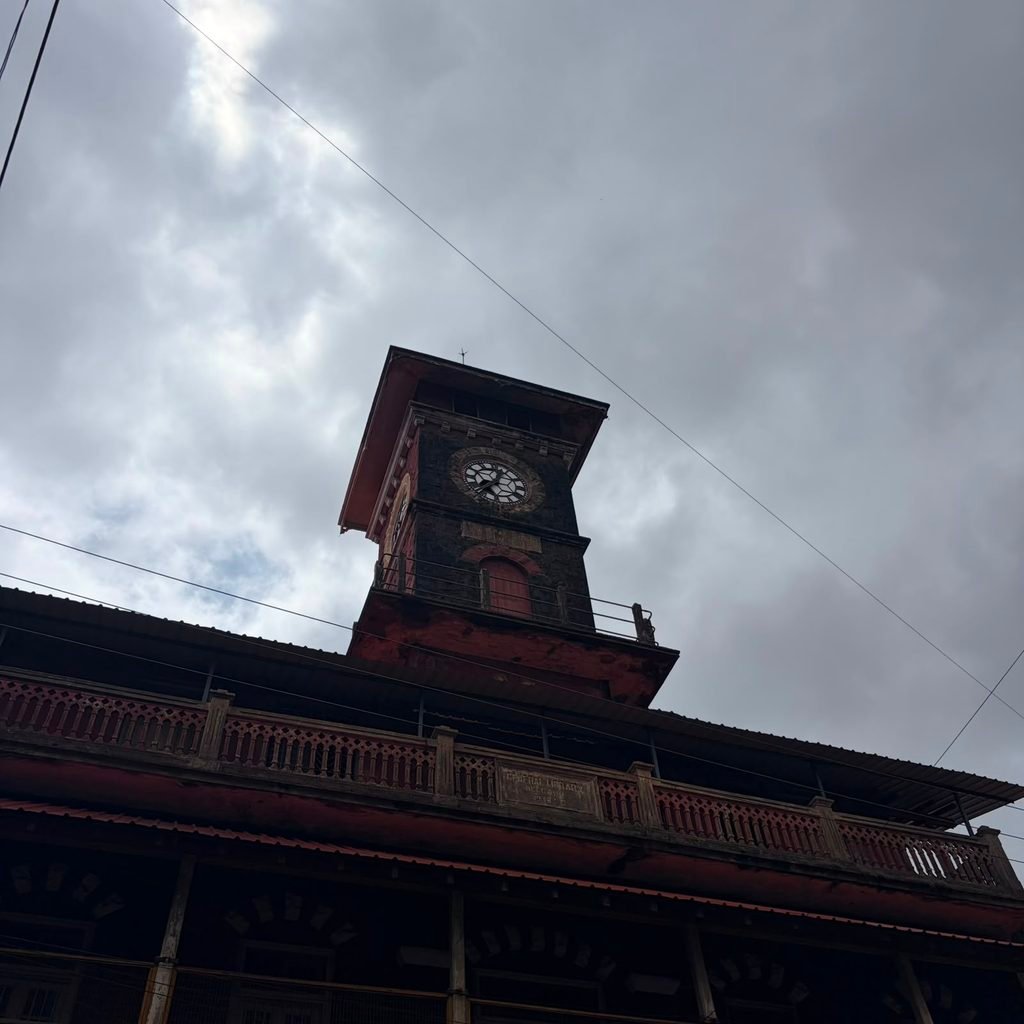
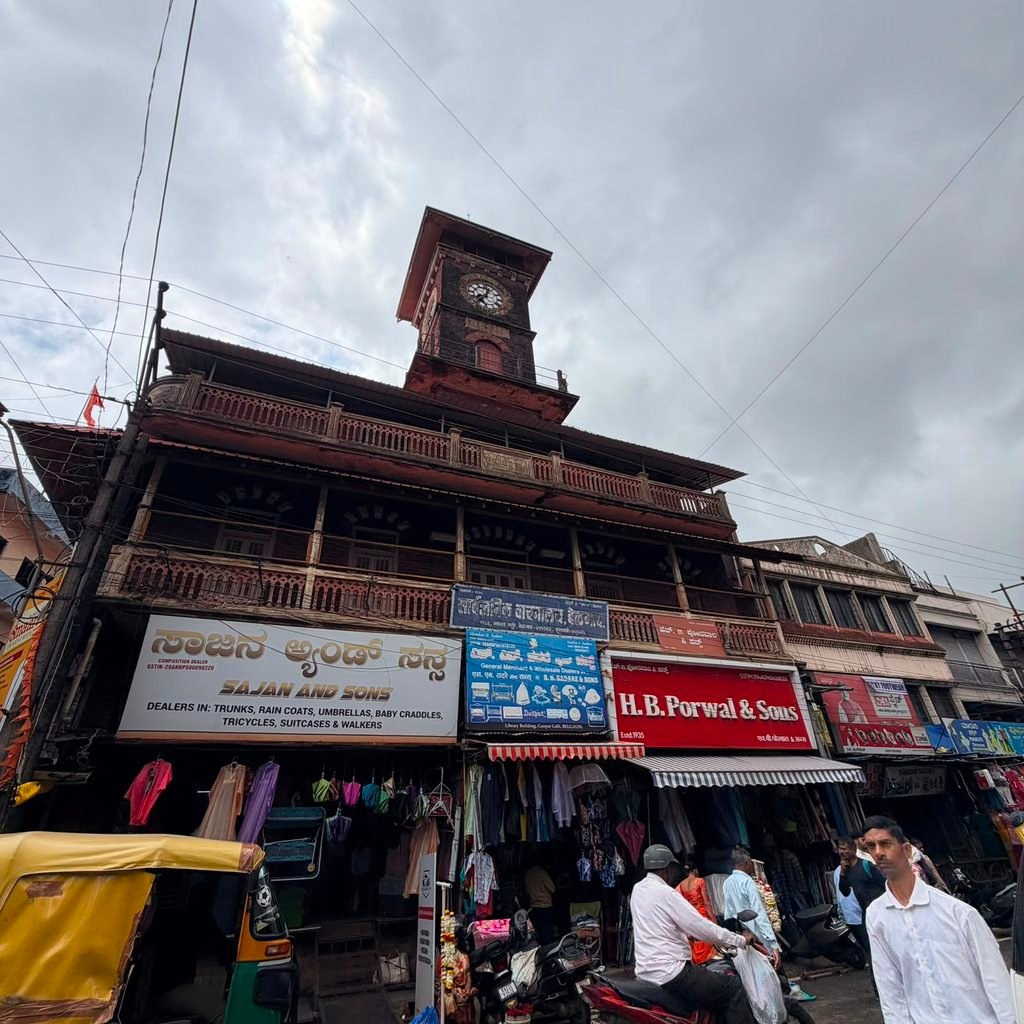
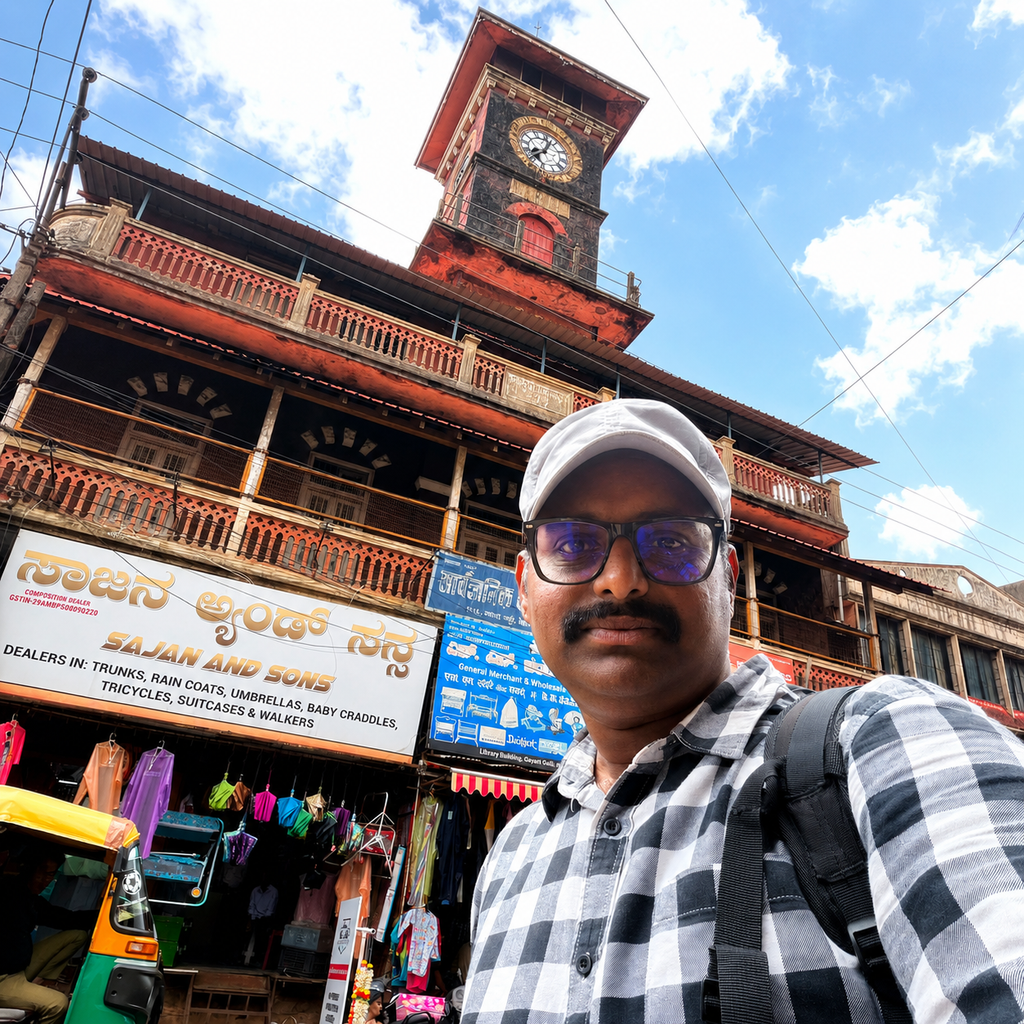
Tucked above the vibrant bazaars of Ganpat Galli, the iconic Belgaum Clock Tower rises over the historic Sarvajanik Vachanalaya (formerly the Belgaum Native General Library). For generations of Belagavi residents, this red-brick tower has stood as an enduring sentinel of literary culture and civic pride.
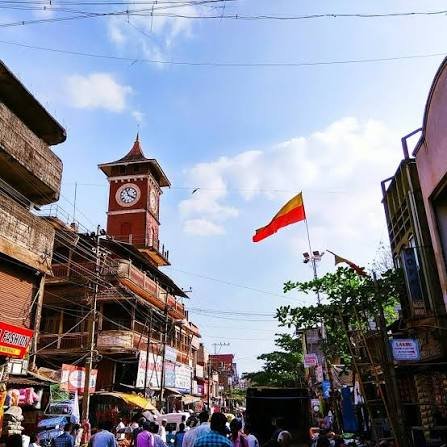
The Epicenter of Learning: Belgaum Native General Library
To appreciate the Clock Tower, one must step into the legacy of the institution beneath it.
- Pioneering Public Knowledge (1848): Established by the then-British Collector J.D. Inverarity, the Belgaum Native General Library is celebrated as the first public library established in the state of Karnataka.
- A Beacon of the Freedom Era: Re-christened as Sarvajanik Vaachnalaya in 1921, the library transformed into an intellectual hub during India’s freedom struggle, curating rare literary treasures in Kannada, Marathi, English, and Gujarati.
Architectural Charm: The Building of the Tower (1925–1935)
As the library’s collection and patronage grew, a community-driven campaign was launched to construct a grand home for the institution.
- People-Powered Heritage: Built between 1925 and 1935, the construction was funded almost entirely by local citizens through donations ranging from ₹5 to ₹1,000, supplemented by a ₹1,500 grant from the Belgaum Nagar Palika (Town Panchayat).
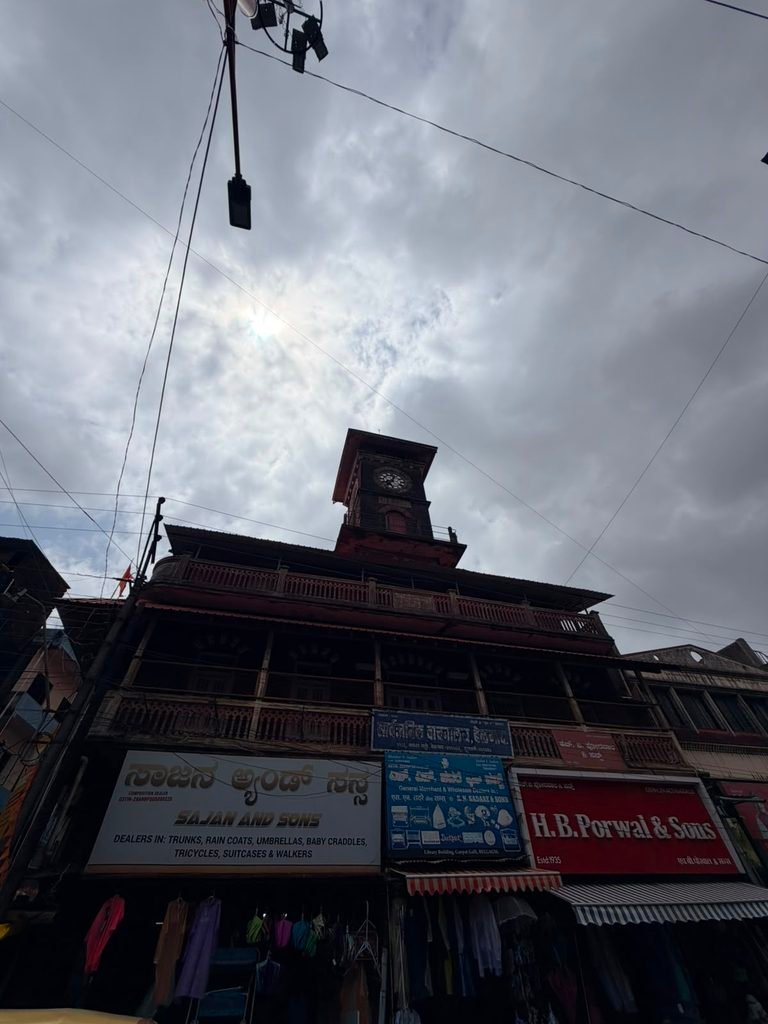
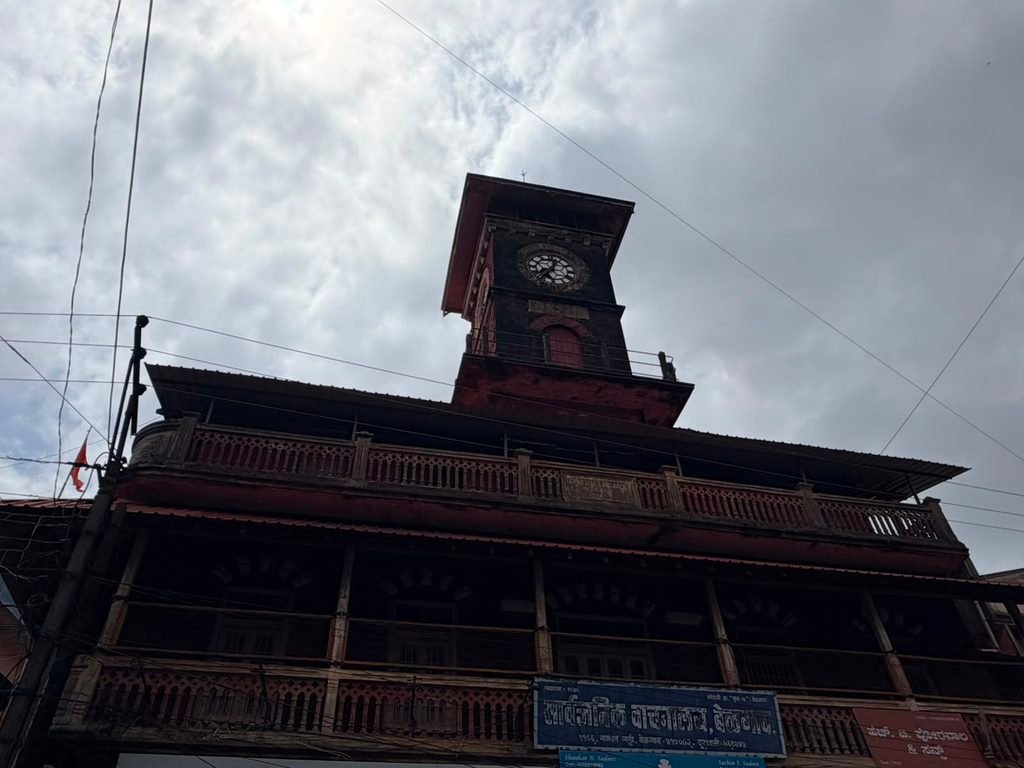
- Indo-Colonial Design: The architectural blueprint was initially drafted by Shri Shashital and subsequently refined by Shri Dharwadkar. The resulting structure combines European colonial clock tower aesthetics with native stone craftsmanship.
- The Heartbeat Mechanism: Crowned by a pyramidal pitched roof and finial, the four-sided clock houses a purely mechanical, gear-driven system that historically required manual key-winding every 48 hours.
Practical Travel Tips for the Modern Explorer
Location & Timing
- Address: Ganpat Galli, Raviwar Peth, Belagavi, Karnataka 590001
- Best Time to Visit: Morning hours (09:00 AM – 12:00 PM) for clear photography before market crowds peak, or early evening (04:30 PM – 07:00 PM) to experience the lively old-city bazaar atmosphere.
How to Reach Belagavi
- By Air: Belagavi Airport (Sambre Airport – IXG) has direct connections to Bengaluru, Mumbai, Hyderabad, and Delhi.
- By Rail/Road: Belagavi Railway Station (BGM) connects directly to Pune, Bengaluru, and Mumbai via the South Western Railway network. State transport buses run frequently from Hubballi, Dharwad, and Goa.
Nearby Heritage Attractions to Add to Your Itinerary
| Attraction | Distance | Highlight |
| Belagavi Fort & Kamal Basadi | ~2.5 km | 13th-century Ratta dynasty fort featuring a 72-petaled lotus Jain temple (Kamal Basadi). |
| Kapileshwar Temple | ~1.5 km | Known as the “Dakshina Kashi,” an ancient shrine dedicated to Lord Shiva. |
| Ramakrishna Mission Ashram | ~3.0 km | Serene memorial cottage where Swami Vivekananda stayed during his 1892 visit. |
| Military Mahadeva Temple | ~4.0 km | Beautifully landscaped temple garden maintained by the Indian Army’s Maratha Light Infantry. |
Notable Heritage Sites and Scenic Getaways Near Belagavi
- Yellur Fort (Rajhansgad)
- Distance: ~15 km from Belagavi
- Overview: Perched atop a hill south of the city, this historic fort provides panoramic views of the Belagavi plateau. Originally constructed by the Ratta dynasty and later held by Maratha rulers, it houses an ancient Shiva temple within its stone bastions and serves as a prime sunset viewpoint.
- Kittur Fort and Palace Ruins
- Distance: ~45 km along the Belagavi–Dharwad highway (NH 48)
- Overview: The seat of Rani Chennamma’s historic resistance against British colonial rule in 1824. The site contains the archaeological ruins of the royal palace, darbar halls, and an on-site government museum exhibiting period weaponry, stone sculptures, and historical inscriptions.
- Shri Kamala Narayana Temple, Degaon
- Distance: ~40 km from Belagavi (near Khanapur)
- Overview: A fine 12th-century stone temple built during the reign of the Goa Kadambas by Queen Kamaladevi. Renowned for its intricate Kadamba-style architecture, tiered stone shikharas, sculpted ceiling rosettes, and peaceful rural setting.
- Godchinamalaki Falls
- Distance: ~55 km from Belagavi (near Gokak)
- Overview: Formed by the Markandeya River flowing through a deep green gorge, this stepped waterfall cascades down in two distinct levels over rocky terraces before merging with the Ghataprabha River. Ideal to visit during the monsoon and post-monsoon seasons.
- Gokak Falls & Suspension Bridge
- Distance: ~65 km from Belagavi
- Overview: The Ghataprabha River plunges 52 meters (170 feet) over a sandstone cliff into a horse-shoe-shaped gorge. The site features a 19th-century colonial-era hanging suspension bridge and the historic 11th-century Chalukyan Mahalingeshwara Temple on the riverbank.
- Saundatti Yellamma Temple & Parasgad Fort
- Distance: ~70 km from Belagavi
- Overview: Located atop the Yellamma Gudda hill, this sacred shrine dedicated to Goddess Renuka is built in a blend of Chalukyan and Rashtrakuta styles. Nearby lies the Parasgad Fort, a rugged hilltop fort overlooking the Malaprabha plains.
- Amboli Ghat & Hill Station
- Distance: ~65 km from Belagavi (in the Sahyadri range)
- Overview: An eco-rich hill station pass in the Western Ghats known for heavy rainfall, dense mist-covered forests, sunset points, and seasonal roadside waterfalls along the Belagavi–Sawantwadi route.